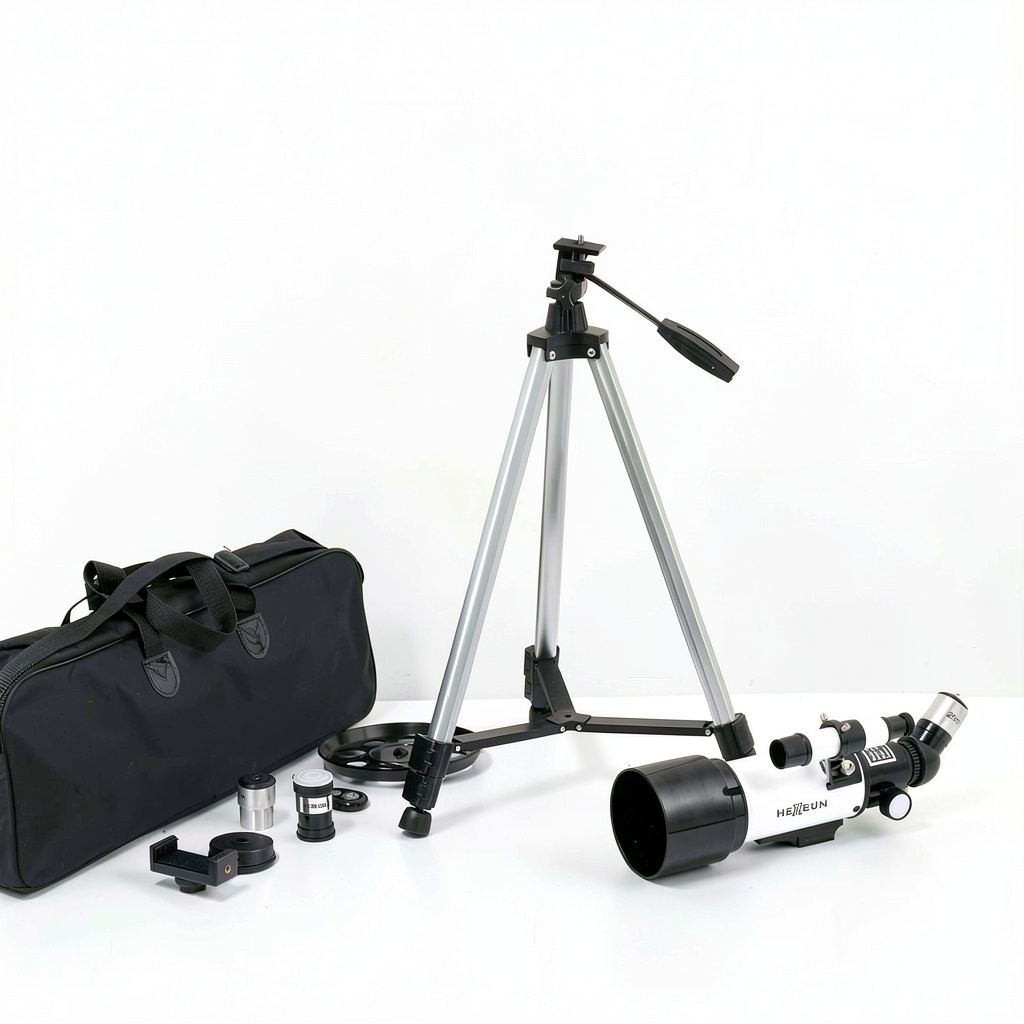

Description
Product Overview
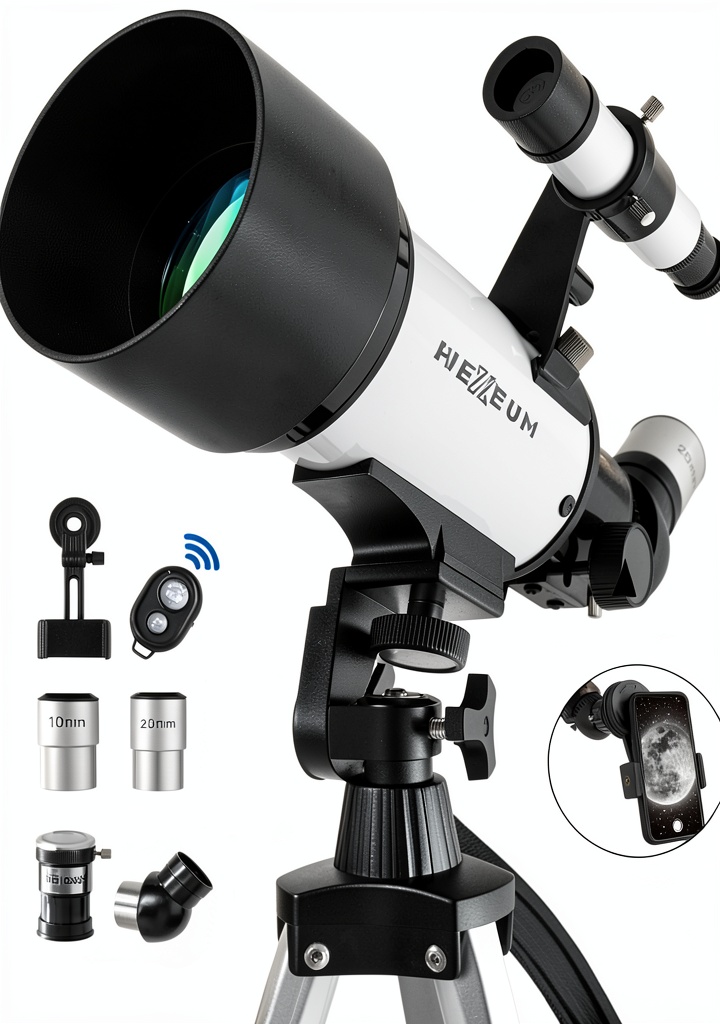
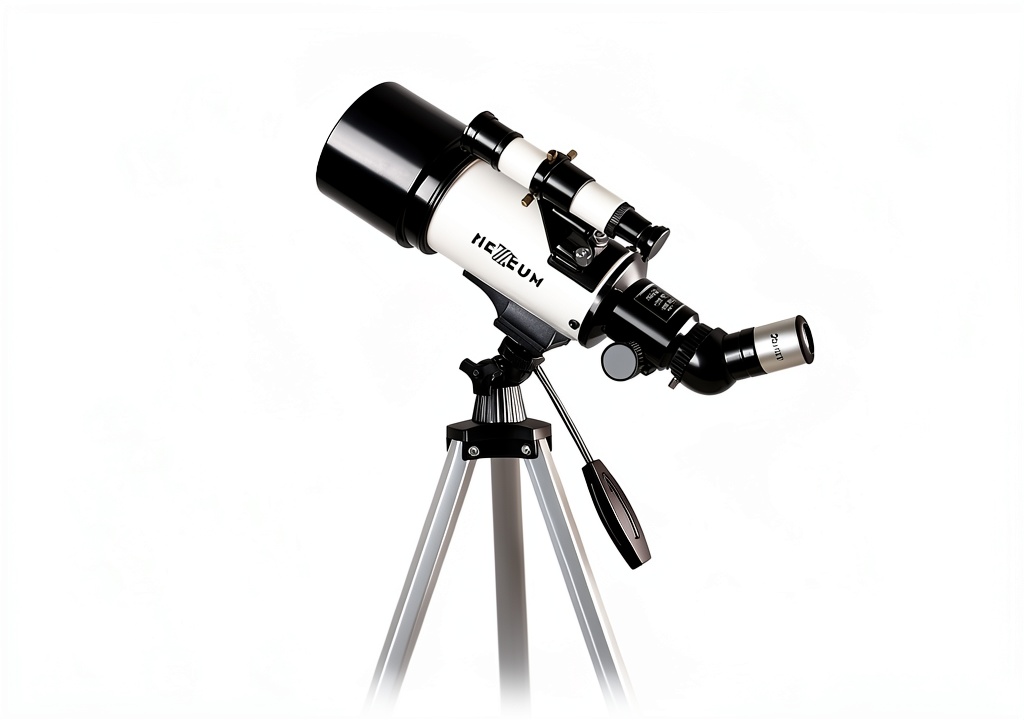
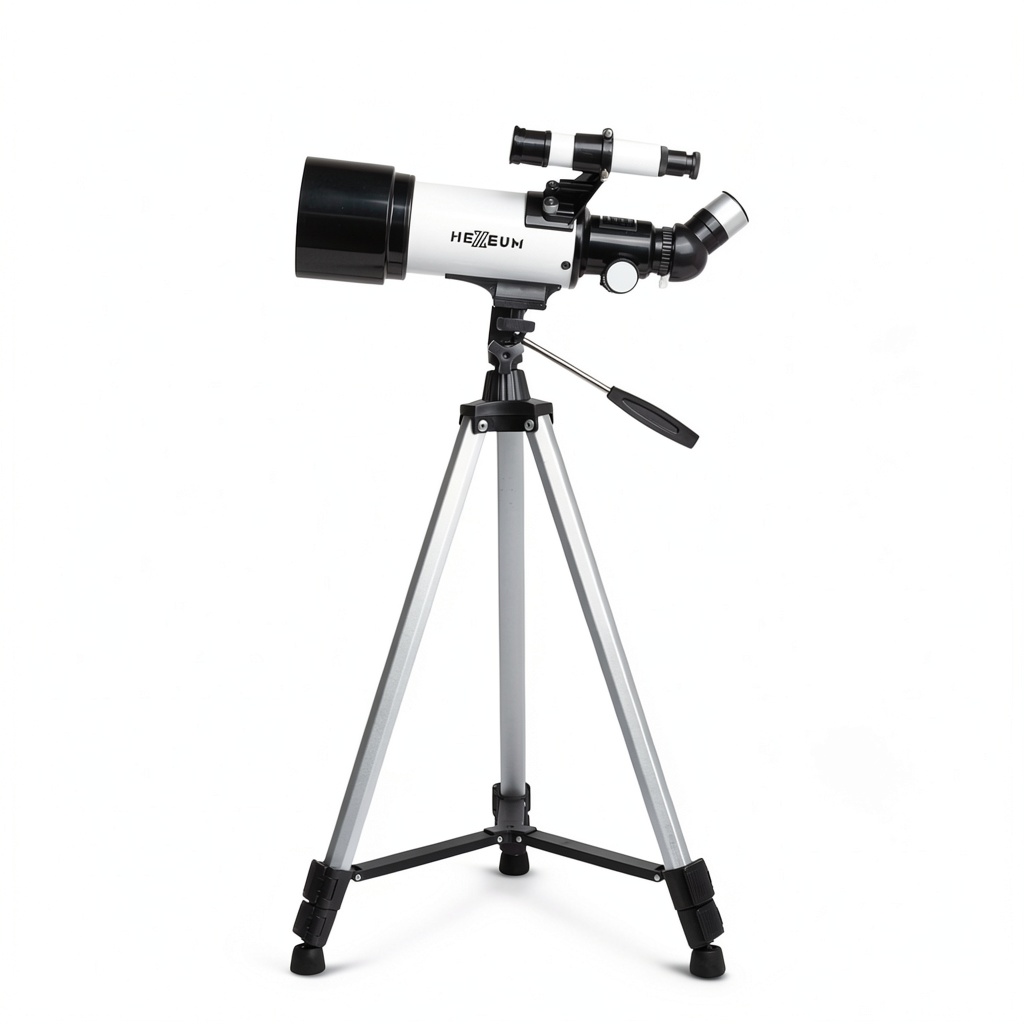
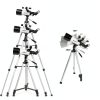
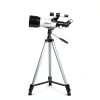
The HEXEUM 70mm catadioptric telescope combines a compact optical tube with a precision engineered alt‑azimuth (AZ) mount, delivering a balanced blend of portability and performance for both novice stargazers and seasoned hobbyists. Measuring 22.8 inches in length, 5 inches in width, and 8.6 inches in height, the instrument fits comfortably into a standard backpack while still offering a generous 500 mm focal length that translates into a focal ratio of f/7.5. The fully multi‑coated optics feature a series of high‑efficiency dielectric coatings applied to each lens surface, reducing light loss and enhancing contrast across the visible spectrum. This coating technology, paired with a 70 mm aperture, gathers ample light to reveal lunar craters, planetary details, and brighter deep‑sky objects such as nebulae and star clusters with striking clarity.
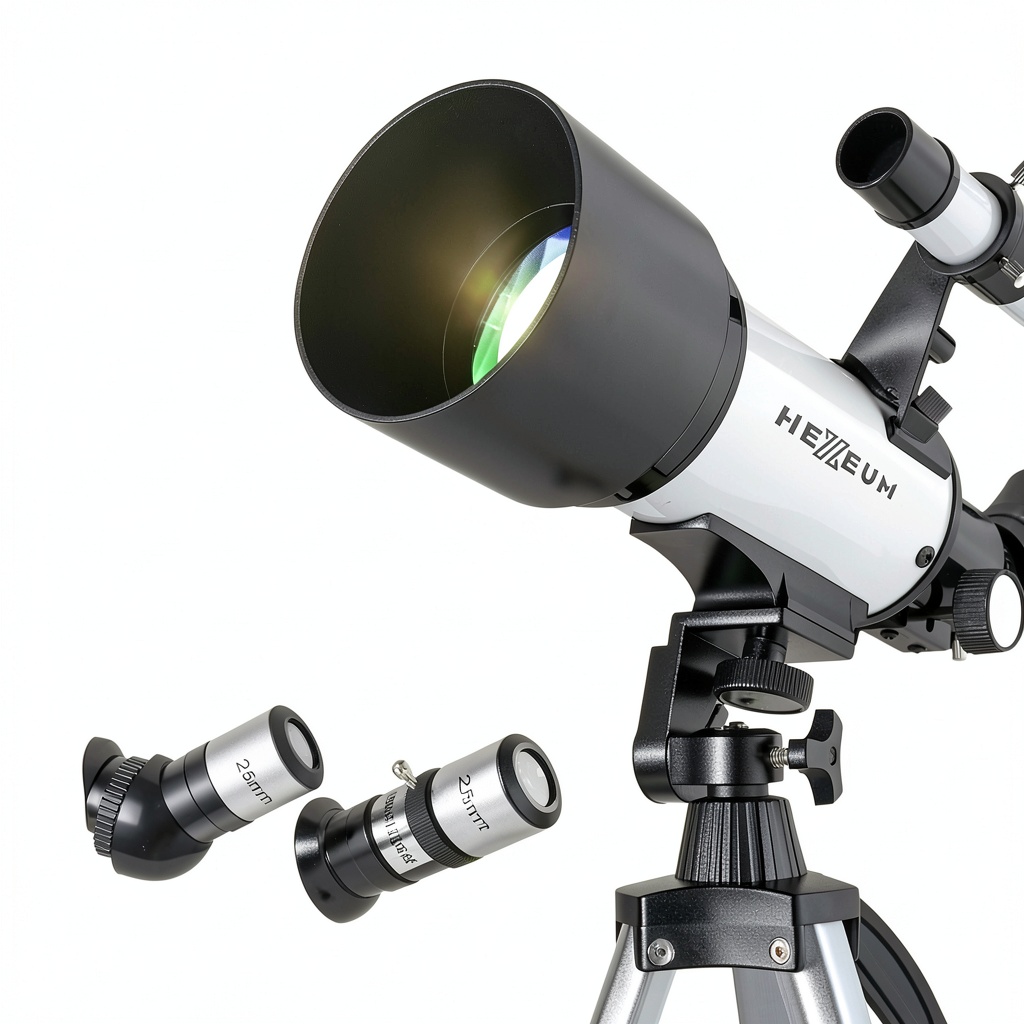
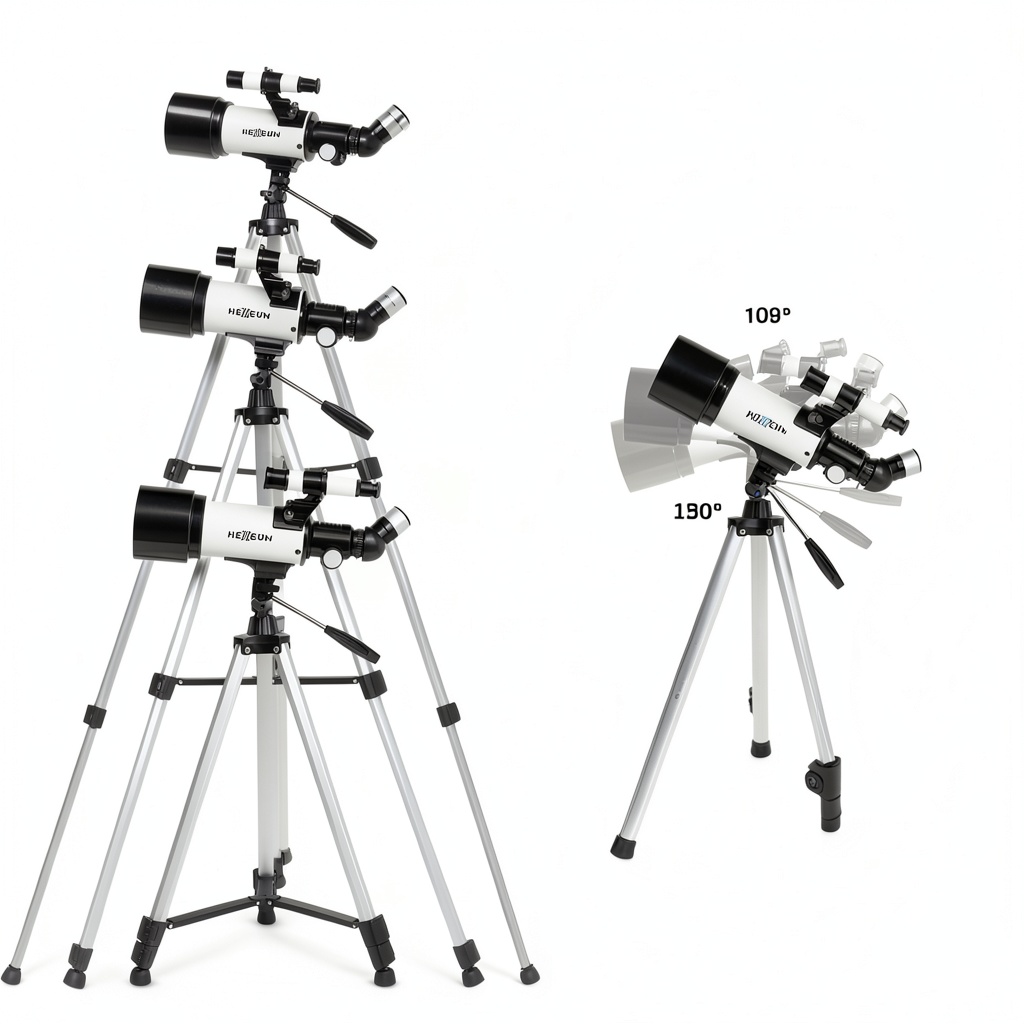
The telescope’s AZ mount is constructed from lightweight yet robust aluminum alloy, providing smooth, motor‑free tracking that can be easily adjusted by hand. The mount includes ergonomic knobs for altitude and azimuth control, allowing users to locate and follow celestial targets with minimal effort. Integrated with a sturdy dovetail plate, the optical tube can be securely attached to the mount, ensuring stable alignment during observation sessions. The included finderscope, a 6×30 prism, offers a wide field of view that simplifies the initial star‑hopping process, while the optional 1.25‑inch diagonal adapter enables the attachment of a variety of eyepieces to suit different magnification needs.
Designed with durability in mind, the telescope’s exterior is finished with a matte black, non‑reflective coating that resists fingerprints, scratches, and the occasional outdoor exposure to dust or moisture. All mechanical components are precision machined to tight tolerances, guaranteeing repeatable performance and long‑term reliability. The product comes with a comprehensive user manual that outlines step‑by‑step assembly, collimation, and maintenance procedures, empowering owners to achieve optimal optical performance from the first night out.
Technical specifications of the HEXEUM 70mm catadioptric telescope are designed to meet the expectations of discerning observers. The optical tube is fabricated from anodized aluminum, providing a lightweight yet rigid structure that resists thermal expansion, which can otherwise degrade image quality. The primary mirror is a 70 mm Schmidt‑Cassegrain design with a 500 mm focal length, delivering a focal ratio of f/7.5 that balances magnification potential with a wide field of view. The multi‑coated lens elements achieve a transmission efficiency of over 90 percent, ensuring that the maximum amount of light reaches the eye. The telescope’s weight, including mount and accessories, is approximately 7 pounds (3.2 kg), making it easy to carry on trips while still offering the stability required for steady observations. The included finderscope provides a 6× magnification with a 30 mm objective, and the two supplied eyepieces—25 mm and 10 mm—cover a magnification range of 25× to 50×, suitable for a variety of celestial targets. All components are engineered to operate reliably in temperature ranges from -10 °C to 40 °C, allowing year‑round use in diverse climates.
Usage
The HEXEUM 70mm catadioptric telescope is engineered for a wide range of observational activities, making it a versatile tool for backyard astronomy, educational programs, and casual outdoor recreation. Its moderate aperture and relatively short focal length make it especially well‑suited for lunar and planetary viewing, where high contrast and fine detail are paramount. Users can enjoy crisp, high‑definition views of the Moon’s maria, craters, and mountain ranges, as well as the cloud bands of Jupiter, the rings of Saturn, and the polar caps of Mars. The telescope’s 500 mm focal length also provides sufficient reach to capture brighter deep‑sky objects such as the Orion Nebula, the Pleiades star cluster, and the Hercules Globular Cluster, offering a rewarding experience for those looking to explore beyond the solar system.
Because the instrument is lightweight and compact, it can be easily transported to dark‑sky sites, camping trips, or community star parties. The AZ mount’s intuitive hand‑controlled motion eliminates the need for power sources, allowing observers to set up quickly and begin scanning the heavens within minutes. The telescope’s finderscope and optional diagonal adapters further expand its usability, enabling users to experiment with a range of eyepieces that deliver magnifications from 25× up to 150×, depending on the observer’s preferences and atmospheric conditions.
Beyond casual backyard sessions, the HEXEUM telescope is an excellent companion for organized astronomy clubs and public outreach events. Its straightforward AZ mount allows multiple users to share the instrument without extensive training, making it ideal for group viewing sessions where participants can take turns observing and discussing celestial objects. The telescope’s sturdy construction tolerates frequent handling, and its compact size fits easily into a standard vehicle trunk, facilitating transport to remote dark‑sky locations where light pollution is minimal. For educators, the telescope serves as a hands‑on teaching aid that illustrates fundamental principles such as focal length, magnification, and the behavior of light through lenses and mirrors. Lesson plans can incorporate real‑time observations of the Moon’s phases, planetary alignments, and seasonal constellations, fostering an interactive learning environment that bridges theory and practice.
Astrophotography enthusiasts will find the HEXEUM telescope a solid platform for capturing detailed images of bright celestial objects. To achieve the best results, start with a sturdy tripod or a dedicated equatorial wedge that can be attached to the AZ mount, providing additional stability for longer exposures. Use the 10 mm eyepiece in conjunction with a DSLR camera and a T‑ring adapter to obtain a native focal length of 500 mm, which yields a field of view suitable for the Moon and the larger planets. For deep‑sky targets, consider employing a short‑exposure stacking technique: capture a series of 5‑second frames, then use software such as DeepSkyStacker to combine them, reducing noise and enhancing faint details. Adjusting the ISO setting to a moderate level (800‑1600) and using a low f‑stop (f/4‑f/5.6) helps balance exposure time with image clarity. Finally, ensure the telescope is well collimated before each imaging session, as even slight misalignment can blur fine planetary features.
Why Choose Us
HEXEUM has built a reputation for delivering high‑quality optical instruments that balance affordability with professional‑grade performance. Every component of the 70mm catadioptric telescope undergoes rigorous quality control testing, from the coating uniformity of each lens element to the mechanical integrity of the mount’s bearing surfaces. The telescope is backed by a two‑year limited warranty that covers manufacturing defects, providing customers with confidence and peace of mind. In addition, HEXEUM offers responsive after‑sales support, including technical assistance, collimation guidance, and replacement parts, ensuring that owners can maintain peak performance throughout the product’s lifespan.
The design philosophy behind this telescope emphasizes user‑centric features that reduce the learning curve often associated with more complex instruments. The inclusion of a pre‑aligned optical tube, a clear instruction manual, and a set of essential accessories such as a finderscope and eyepiece adapters means that users can begin observing almost immediately after unpacking. HEXEUM also prioritizes sustainability by selecting recyclable materials for packaging and employing environmentally responsible manufacturing processes, aligning the brand with modern consumer values.
HEXEUM’s commitment to customer satisfaction extends beyond the point of sale through a proactive service network that includes regional service centers and an online knowledge base. Owners can access detailed troubleshooting guides, video tutorials, and community forums where experienced astronomers share tips on collimation, eyepiece selection, and optimal viewing conditions. Should any component require repair, the warranty process is streamlined: customers submit a claim through the HEXEUM website, receive a prepaid shipping label, and have the item repaired or replaced within a typical turnaround of 7‑10 business days. This level of support reduces downtime and reinforces confidence that the telescope will remain a reliable tool for years of sky‑watching adventures.
HEXEUM also fosters an active community of users through online forums, social media groups, and periodic webinars that cover topics ranging from basic telescope setup to advanced imaging techniques. Members can share their observation logs, post astrophotography results, and exchange advice on optimal viewing conditions for different geographic locations. The company regularly updates its knowledge base with step‑by‑step tutorials, troubleshooting checklists, and video demonstrations, ensuring that owners have ready access to reliable information whenever they encounter challenges. For institutions and schools, HEXEUM offers bulk‑purchase discounts and educational kits that include lesson‑plan guides, activity worksheets, and a curated set of accessories tailored for classroom use. This commitment to education and community engagement reinforces the brand’s reputation as a partner in the lifelong pursuit of astronomical discovery.
Key Features
- Compact 70 mm aperture delivers bright, high‑contrast views of lunar and planetary details.
- Fully multi‑coated optics reduce light loss and enhance color fidelity across the visible spectrum.
- Lightweight AZ mount offers smooth, motor‑free tracking for quick target acquisition and easy manual adjustments.
- Durable matte black finish resists scratches, fingerprints, and outdoor elements for long‑lasting use.
- Comprehensive after‑sales support includes a two‑year warranty, technical assistance, and replacement parts.
FAQ
What is the difference between a catadioptric telescope and a traditional refractor?
A catadioptric telescope combines lenses and mirrors to fold the optical path, allowing a shorter tube length while maintaining a long focal length. This design provides a compact form factor and typically better correction of optical aberrations compared to a simple refractor, resulting in sharper images and easier portability.
Can I use this telescope for astrophotography?
Yes. The telescope’s stable AZ mount can accommodate a camera adapter, enabling short‑exposure imaging of the Moon, planets, and bright deep‑sky objects. While the mount does not have motorized tracking, manual tracking is sufficient for capturing a series of frames that can be stacked to improve image quality.
How do I collimate the telescope if the images appear blurry?
Collimation involves aligning the optical elements so that light converges correctly at the focal point. The user manual provides a step‑by‑step collimation procedure using a collimation cap or laser collimator. Typically, you adjust the secondary mirror screws until a distant point source appears centered and symmetrical in the eyepiece.
Is the telescope suitable for beginners?
Absolutely. The telescope’s intuitive AZ mount, included finderscope, and clear assembly instructions make it an ideal entry‑level instrument. Its moderate aperture and focal length provide rewarding views without the complexity of equatorial mounts, allowing new users to focus on learning the night sky.
What accessories are included, and what can I add later?
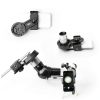
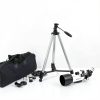
The package contains the optical tube, AZ mount, 6×30 finderscope, a set of two eyepieces (25 mm and 10 mm), a dovetail plate, and a user manual. Additional accessories such as higher‑magnification eyepieces, a Barlow lens, a motorized tracking base, or a camera adapter can be purchased separately to expand the telescope’s capabilities.
How do I maintain the optics to ensure long‑term performance?
Regular maintenance involves gently cleaning the lens surfaces with a soft, lint‑free cloth and a mild optical cleaning solution. Avoid using abrasive materials or excessive pressure. Store the telescope in a dry environment, and consider using a protective dust cover when not in use. Periodic collimation checks help keep the optical alignment optimal.
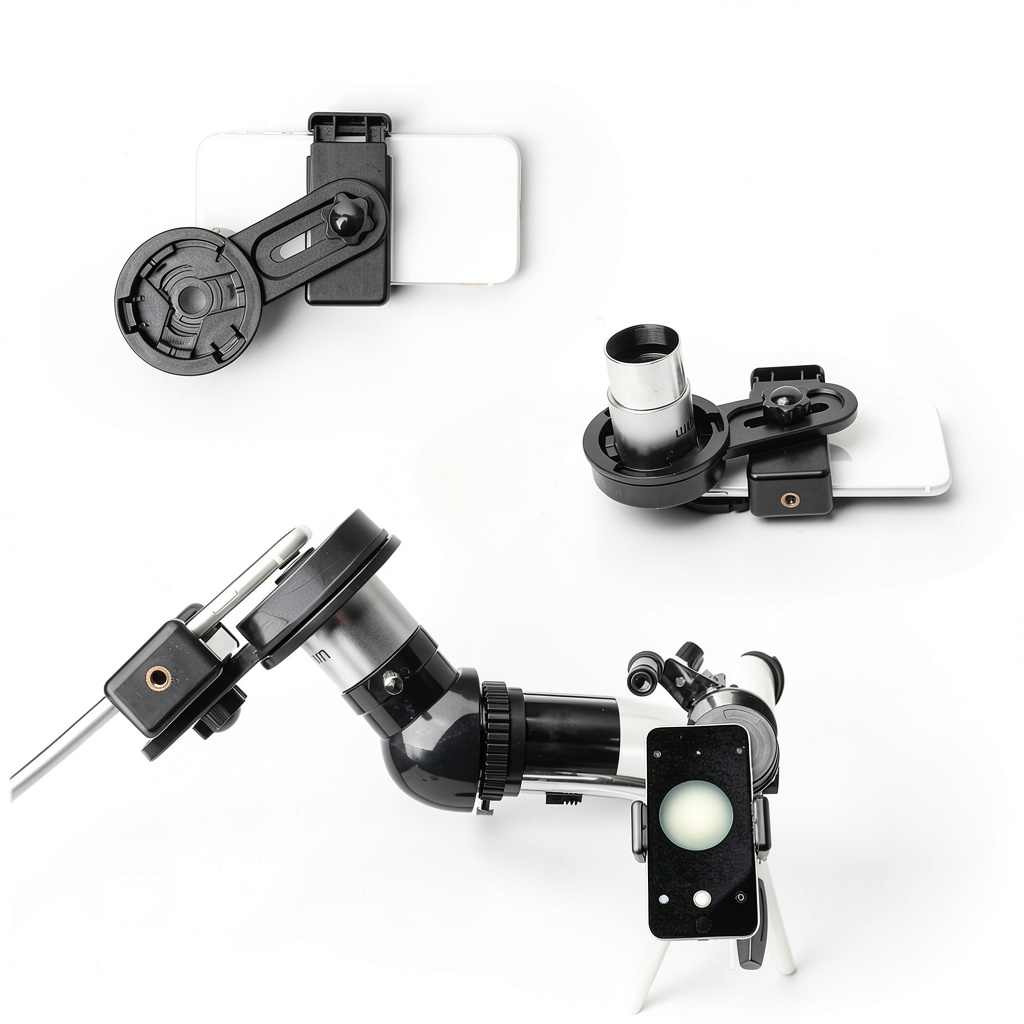
Is the telescope compatible with smartphone adapters for live streaming?
Yes, the telescope’s eyepiece holder can accommodate a universal smartphone adapter that aligns the phone camera with the eyepiece. This setup allows users to capture live video or photos of celestial objects and share them on social media or streaming platforms, enhancing the outreach experience.
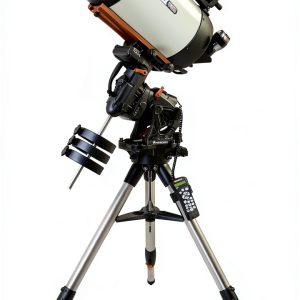
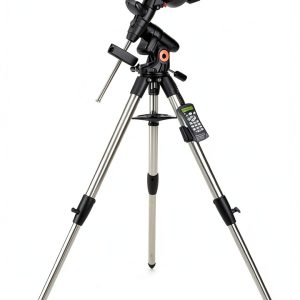
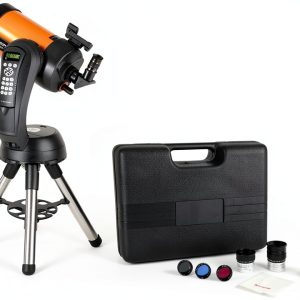
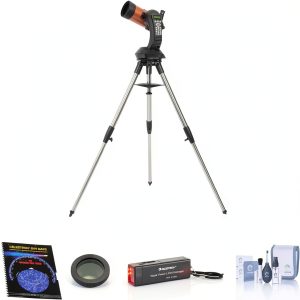
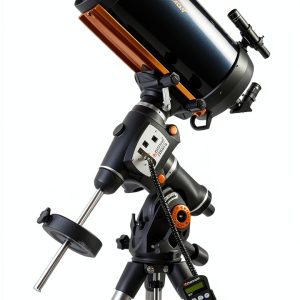 Celestron CGEM II 925 Schmidt-Cassegrain Telescope
Reviews
There are no reviews yet.